
Wellness & Health · 16 Jul 2025
Mindful Screen Use for Children: Why Real-World Play is a Better Choice
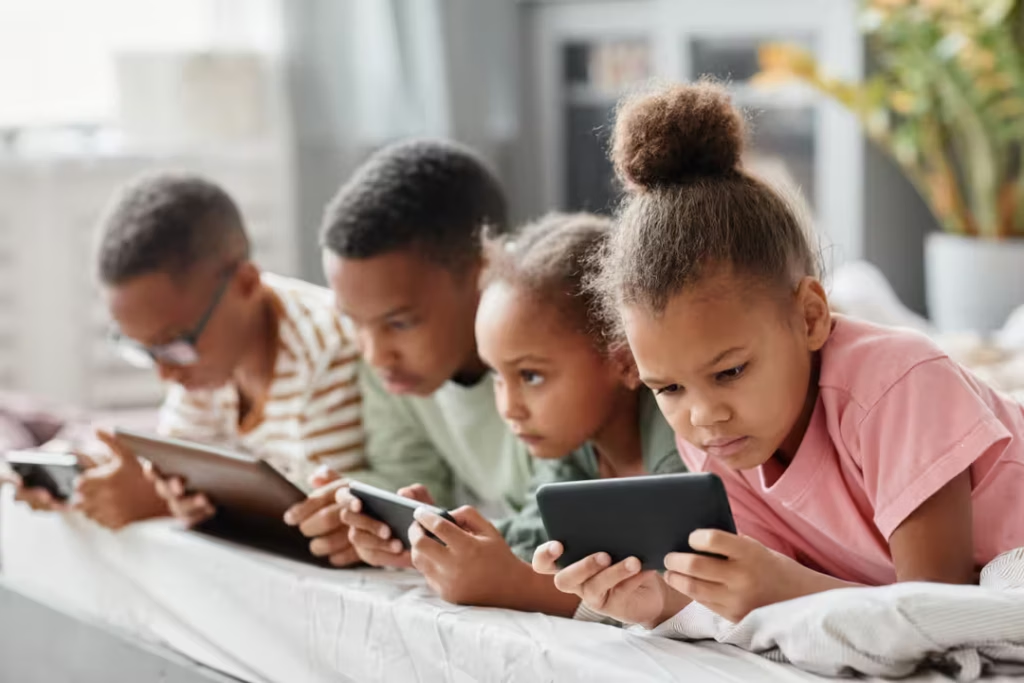
In our digitally saturated world, Dibber International Preschools is encouraging families to adopt a more conscious approach to technology. While screens are a part of modern life, practising mindful screen use for children is crucial.
The focus should shift from digital distraction to the immense value of real-world play, especially for toddlers and preschoolers whose development is at a critical stage.
“Young children learn through experience—by engaging with people, moving their bodies, and exploring the world around them. No screen can replace the warmth, responsiveness, and complexity of a real-life interaction.”
— Ursula Assis, Country Director of Dibber International Preschools South Africa

Why Mindful Screen Use for Children Matters for Brain Development
By the age of six, a child’s brain has already reached approximately 90% of its adult size. During these foundational years, neural connections form at an incredible rate of up to one million per second.
This period of rapid brain development consequently makes it vital to provide rich, real-world experiences. These interactions are essential for developing strong language skills, fostering social awareness, and cultivating emotional resilience.
Unregulated screen time can limit these crucial opportunities for imaginative play and problem-solving. In short, prioritising hands-on engagement over screens helps lay the groundwork for healthy cognitive and social growth.
The Link Between Screens and Developmental Delays
Compelling evidence and studies back the call for mindfulness around screens. As Ursula Assis points out:
“Studies have found that too much screen time in early childhood is linked to reduced empathy, shorter attention spans, weakened impulse control, and even delays in language acquisition.”
In fact, leading brain scientists argue that infants under one learn nothing from screens at all.
As neuroscientist Patricia Kuhl explains, babies absorb information best from human interaction; for this reason, learning relies deeply on eye contact, tone of voice, and the rhythm of a real conversation.


A Thoughtful Approach to Technology in Education
The educational philosophy at Dibber centres on this understanding, prioritising human connection over digital interfaces.
“At Dibber, technology is used thoughtfully and sparingly, with an emphasis on what truly matters for early development: play, creativity, relationships, and movement. What might look like simple, unstructured time is, in truth, where the most important growth occurs. That’s when children practise problem-solving, build imagination, and learn to manage frustration—skills screens simply cannot teach.”
— Ursula Assis
Tips for Mindful Screen Use for Children & Screen-Free Alternatives
The World Health Organisation’s guidelines are clear: no screen time for children under two, and no more than one hour daily for children aged two to four. Instead of defaulting to a device, Dibber encourages parents and caregivers to embrace simple, powerful alternatives:
- Storytime and reading aloud, which supports vocabulary development and focus.
- Face-to-face play, to nurture empathy and emotional intelligence.
- Outdoor exploration, which builds sensory awareness and coordination.
- Simple, screen-free routines, such as shared mealtimes and bedtime conversations.
Ultimately, the goal is to support families in making conscious choices that benefit their children in the long run.
“We understand the pressures families face, and we’re here to support—not shame—parents navigating these challenges. But we want to remind families that the most valuable thing they can give their children isn’t a device—it’s their presence.”
— Ursula Assis, Country Director of Dibber International Preschools South Africa
Visit Dibber International Preschools www.dibber.co.za